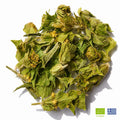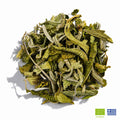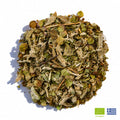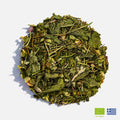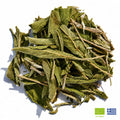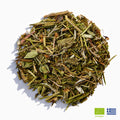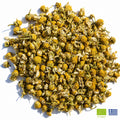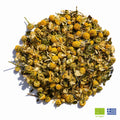
Wild Greek herbs drying after harvest
Herbs & benefits

Greek herbal teas & their health benefits

A field guide to the Greek herbs in your cup: where they grow, how they taste, and what studies show.

Herb guide

Greek herbs & their benefits

All 20 Greek herbs in our teas, with everything each one is known for, plus what the research shows. Filter by goal or search by name.

20 herbs

Bundles of dried Greek mountain tea (Sideritis) in a basket

Mountain tea τσάι του βουνού

Sideritis scardica · ironwort, shepherd's tea

Emerging evidence
  • Immune
  • Calm
  • Focus
  • Everyday

Greece's everyday cup: caffeine-free, gently sweet and rich in polyphenols.

Known for

  • Helps prevent oxidative stress
  • Anti-inflammatory, gastroprotective and antioxidant properties
  • Supports cognitive function
  • Helps lower blood pressure
  • Protects the digestive system
  • Helps with colds and flu
What the research says
  • Recognised by the European Medicines Agency for coughs with colds and mild digestive discomfort.
  • In a 28-day randomised trial of 155 adults aged 50–70, a Sideritis extract reduced anxiety and improved attention accuracy.
  • Rich in verbascoside, apigenin and other antioxidant polyphenols.

Good to know: Avoid if allergic to mint-family plants. Not recommended in pregnancy or breastfeeding (EMA).

Greek mountain tea benefits →

Find it in our teas

Flowering dittany of Crete with woolly leaves and pink bracts

Dittany of Crete δίκταμο

Origanum dictamnus · diktamo, erontas

Traditional use
  • Digestion
  • Immune

The rare cliff herb of Crete, used since Hippocrates for the stomach and for coughs.

Known for

  • Eases digestive complaints, including cramps and stomach upsets
  • Soothes the stomach and intestines
  • Relieves headaches and neuralgia
  • Acts against harmful bacteria of the mouth
  • Helps fight coughs, colds and sore throats
What the research says
  • EMA traditional-use monograph (2013): mild digestive complaints, cough with colds, and minor skin inflammation.
  • Rich in carvacrol; lab studies show antimicrobial and antioxidant activity.

Good to know: Traditionally avoided in pregnancy and breastfeeding. Mint-family allergy.

The dittany tea guide →

Find it in our teas

Silver-green leaves of Greek sage (Salvia fruticosa)

Greek sage φασκόμηλο

Salvia fruticosa

Emerging evidence
  • Focus
  • Immune
  • Everyday

Ikaria's longevity herb, softer and more eucalyptus-scented than common sage.

Known for

  • Supports oral health
  • Helps lower blood sugar levels
  • Helps lower ‘bad’ LDL cholesterol
  • Supports memory
  • Promotes brain health and lifts mood
What the research says
  • In randomised trials, single doses of sage improved memory and mood in healthy young and older adults (Kennedy 2006; Scholey 2008).
  • A 4-month trial of sage extract in mild-to-moderate Alzheimer's improved cognitive scores vs placebo (Akhondzadeh 2003).
  • A small pilot found sage tea improved cholesterol and antioxidant status (Sá 2009).

Good to know: Keep to 2–3 cups a day; avoid in pregnancy, breastfeeding and epilepsy.

Sage & rosemary for memory →

Find it in our teas
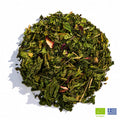
Fresh rosemary sprigs and a cup of rosemary tea

Rosemary δεντρολίβανο

Salvia rosmarinus

Emerging evidence
  • Focus
  • Digestion

Aromatic Ikarian rosemary, studied for memory and used for digestion.

Known for

  • Improves digestion
  • Enhances memory and concentration
  • Fights free-radical damage in the brain
  • Helps protect against brain aging
  • In lab studies, slowed the growth of leukemia and breast cancer cells
  • Helps protect against macular degeneration
What the research says
  • EMA: traditional use for indigestion and mild spasms of the gut.
  • Older adults taking 750 mg rosemary powder had faster memory (Pengelly 2012); rosemary aroma and rosemary water improved memory performance (Moss 2003, 2012, 2018).
  • Carnosic acid protected retinal cells in lab and animal studies (Rezaie 2012).

Good to know: Medicinal amounts not recommended in pregnancy. Caution with gallstones.

Rosemary tea benefits →

Find it in our teas

Fresh peppermint leaves

Peppermint μέντα

Mentha × piperita

Clinical evidence
  • Digestion
  • Energy

Cooling and bright: the best-studied herb for an unsettled gut.

Known for

  • Eases digestive upsets and stomach issues
  • Lifts energy levels
  • Relieves menstrual cramps
  • Relieves headaches
  • Improves symptoms of irritable bowel syndrome (IBS)
What the research says
  • Peppermint oil eases IBS symptoms: a meta-analysis of 12 RCTs (835 patients) found it clearly better than placebo (Alammar 2019).
  • Peppermint tea increased alertness and memory in a trial of 180 adults (Moss 2016).

Good to know: Can worsen heartburn/reflux in some people.

Best herbs for gut health →

Find it in our teas

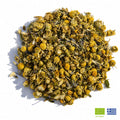
Whole dried chamomile flowers

Chamomile χαμομήλι

Matricaria chamomilla

Clinical evidence
  • Sleep
  • Calm
  • Digestion

Whole, honey-sweet flowers from Grevena; the classic calming cup.

Known for

  • Strong anti-inflammatory and antioxidant properties
  • Calming, sedative and anti-anxiety effects
  • Relieves gastrointestinal discomfort
  • Anti-tumour properties in lab studies
  • Associated with lower cardiovascular risk
  • Supports the immune system
What the research says
  • Chamomile extract improved sleep quality in a 28-day RCT of 60 older adults (Adib-Hajbaghery 2017).
  • Reduced anxiety symptoms in generalised anxiety disorder (Amsterdam 2009; Mao 2016).
  • Rich in apigenin, which binds the brain's calming GABA-A receptors in lab studies.

Good to know: Avoid with ragweed/daisy allergy; check with your doctor if you take warfarin.

Apigenin in chamomile →

Find it in our teas

Dried lavender buds

Lavender λεβάντα

Lavandula angustifolia

Clinical evidence
  • Sleep
  • Calm

Floral and soothing; studied for stress and sleep.

Known for

  • Promotes restful sleep and relaxation, and eases insomnia
  • Increases alpha-wave (relaxed) brain activity
  • Calming, anti-anxiety and sedative properties
  • Mood-balancing, antidepressant-like properties
  • Relieves pain and inflammation
  • Neuroprotective and nootropic properties
What the research says
  • Oral lavender oil (Silexan 80 mg) improved sleep in anxious patients, mainly by reducing anxiety (Seifritz 2019).
  • Lavender aroma improved sleep quality in students (Lillehei 2015).
  • EMA: traditional use for mild stress and to aid sleep.

Good to know: Lavender essential oil is not the same as tea; follow product directions.

Best herbs for sleep →

Find it in our teas
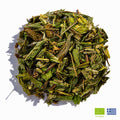
Dried passionflower herb

Passionflower πασιφλόρα

Passiflora incarnata

Emerging evidence
  • Sleep
  • Calm

A gentle evening herb for a busy mind.

Known for

  • Relieves tension, restlessness and irritability
  • Promotes deep sleep and helps with insomnia
  • Anti-anxiety activity
  • Relieves menopausal symptoms
  • Anti-inflammatory and antioxidant properties
What the research says
  • One cup of passionflower tea nightly for a week improved subjective sleep quality vs placebo (Ngan & Conduit 2011).
  • EMA: traditional use for mild stress and to aid sleep.

Good to know: Not recommended in pregnancy. May add to the effect of sedatives.

Best herbs for sleep →

Find it in our teas

Dried valerian root pieces

Valerian root βαλεριάνα

Valeriana officinalis

Emerging evidence
  • Sleep

Earthy root used across Europe to help you fall asleep.

Known for

  • Promotes restful sleep and helps with insomnia
  • Helps you fall asleep faster
  • Lowers anxiety
  • Calms the brain and nervous system
  • Reduces hot flashes during menopause
What the research says
  • EMA: relief of mild nervous tension and sleep disorders.
  • A 2020 systematic review of 60 studies (about 6,900 people) found valerian may improve sleep quality and is generally well tolerated (Shinjyo 2020).

Good to know: Don't combine with alcohol or sedatives; don't drive if drowsy. Rare liver reports.

Best herbs for sleep →

Find it in our teas
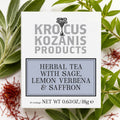
Fresh lemon balm leaves

Lemon balm μελισσόχορτο

Melissa officinalis

Emerging evidence
  • Calm
  • Sleep
  • Digestion

Lemony and bright; a classic for stress and restlessness.

Known for

  • Helps relieve stress and reduce anxiety
  • Boosts cognitive function
  • Helps with cold sores
  • Eases insomnia and other sleep troubles
  • Relieves nausea and indigestion
What the research says
  • EMA: traditional use for mild stress, to aid sleep and for mild digestive complaints.
  • In a small open-label study, lemon balm extract reduced anxiety and insomnia scores (Cases 2011).

Good to know: Check with your doctor if you have thyroid disease.

Best herbs for sleep →

Find it in our teas

Yellow St John’s wort flowers and dried herb for tea

St John’s wort σπαθόχορτο

Hypericum perforatum

Clinical evidence
  • Calm

The golden summer flower of the Greek hills, the best-studied herb for low mood.

Known for

  • Improves symptoms of mild to moderate depression
  • Eases menopausal symptoms
  • Helps reduce anxiety
  • Fights inflammation-related disorders
  • Antioxidant and neuroprotective properties
What the research says
  • A Cochrane review of 29 randomised trials (5,489 patients) found Hypericum extracts more effective than placebo for major depression, and similar to standard antidepressants with fewer side effects (Linde 2008).
  • Contains hypericin and hyperforin, studied for their effects on mood-related neurotransmitters.

Good to know: Interacts with many medicines, including antidepressants, birth control pills, blood thinners and HIV and transplant drugs. Talk to your doctor before use. Not for pregnancy or breastfeeding.

Dried stinging nettle leaves

Stinging nettle τσουκνίδα

Urtica dioica

Emerging evidence
  • Everyday

Grassy, mineral-rich leaf used as a spring tonic.

Known for

  • Helps regulate blood glucose
  • Reduces water retention and supports weight loss
  • Rich in antioxidant nutrients
  • Antimicrobial and anti-inflammatory activity
  • Supports prostate (BPH) and bladder health
  • Relieves joint pain
  • Supports immune function
  • Helps maintain normal blood pressure
What the research says
  • EMA: traditional use to increase urine flow and for minor joint pain.
  • Nettle root extract improved urinary symptoms of benign prostatic hyperplasia in a 6-month RCT of 558 men (Safarinejad 2005).

Good to know: Can interact with diuretics, lithium, blood-pressure and diabetes medicines.

Find it in our teas
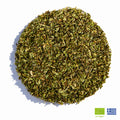
Dandelion flowers and roots

Dandelion root ταραξάκο

Taraxacum officinale

Traditional use
  • Digestion
  • Everyday

Bitter, roasted-tasting root at the heart of Ikaria Blue Zone Tea.

Known for

  • Immune-supporting and antioxidant properties
  • Helps reduce cholesterol absorption
  • Supports cardiovascular health
  • Antimicrobial and anti-inflammatory properties
  • Helps maintain healthy blood glucose
What the research says
  • EMA: traditional use for digestive complaints and to increase urine flow.
  • Dandelion leaf increased urination frequency in a small human study (Clare 2009).

Good to know: Avoid with ragweed allergy, gallbladder problems, or if you take diuretics or lithium.

The Ikaria tea guide →

Find it in our teas
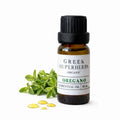
Dried hibiscus flowers

Hibiscus ιβίσκος

Hibiscus sabdariffa

Clinical evidence
  • Everyday

Tart, ruby-red and delicious iced.

Known for

  • Helps lower blood pressure
  • Supports weight loss
  • Helps block fat accumulation
  • Fights free radicals
  • Anti-inflammatory and antioxidant properties
  • Helps reduce ‘bad’ LDL cholesterol
What the research says
  • A meta-analysis of randomised trials found hibiscus tea lowered systolic and diastolic blood pressure (Serban 2015).
  • Rich in anthocyanins and other antioxidants.

Good to know: Check with your doctor if you take blood-pressure medicine; avoid in pregnancy.

Cold brew herbal tea →

Find it in our teas

Tribulus terrestris plant

Tribulus τριβόλι

Tribulus terrestris · caltrop

Emerging evidence
  • Energy

A traditional Mediterranean herb for vitality and libido.

Known for

  • Helps boost libido in men and women
  • Lifts energy levels
  • Reduces inflammation
  • Provides pain relief
  • Improves symptoms of erectile dysfunction
  • Reduces menopausal symptoms
What the research says
  • In a 2025 review of 10 trials, 400–750 mg a day for 1–3 months improved erectile function in 3 of 5 studies that measured it; evidence was rated low quality (Vilar Neto 2025).
  • Most studies found no change in testosterone.

Good to know: Rare liver and kidney reports. Not studied in pregnancy.

Best herbal tea for energy →

Find it in our teas
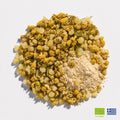
Fresh lemon verbena leaves

Lemon verbena λουίζα

Aloysia citrodora

Emerging evidence
  • Immune
  • Calm

The brightest lemon scent in the Greek garden.

Known for

  • Immune-supporting and anti-inflammatory properties
  • Boosts antioxidant enzyme activity
  • Reduces muscle damage and fatigue after exercise
  • Supports weight loss
  • Natural pain-relieving activity
What the research says
  • Lemon verbena extract reduced markers of muscle damage after exercise in a 21-day trial (Funes 2011).
  • Rich in verbascoside, an antioxidant polyphenol also found in mountain tea.

Good to know: Generally well tolerated in food amounts.

Find it in our teas

Dried wild Greek oregano from Ikaria

Wild oregano ρίγανη

Origanum vulgare

Emerging evidence
  • Immune
  • Digestion

Ikaria's bold, peppery oregano, for the kitchen and the teacup.

Known for

  • Rich in carvacrol, thymol and rosmarinic acid
  • Strong antimicrobial activity in lab studies
  • Antioxidant properties
  • Traditionally used for coughs, colds and digestion
  • After meals, helped improve cholesterol in a small study
What the research says
  • Oregano infusions are rich in rosmarinic acid (Martins 2014); carvacrol and thymol show strong antimicrobial activity in lab studies.
  • Oregano distillate after meals improved cholesterol in patients with mild hyperlipidaemia (Özdemir 2008).

Good to know: Mint-family allergy. Take oregano essential oil internally only with your physician's OK.

Oregano tea benefits →

Find it in our teas
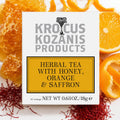
Chios Mastic Gum Tea with chamomile and mastic

Chios mastic μαστίχα

Pistacia lentiscus var. chia

Clinical evidence
  • Digestion

The PDO resin of Chios, prized for the stomach since antiquity.

Known for

  • Soothes the stomach and eases indigestion
  • Recognised by the EMA for mild dyspepsia
  • Improved functional dyspepsia in a clinical trial
  • Traditionally used for oral health
  • Soothes minor skin inflammation (EMA)
What the research says
  • EMA: traditional use for mild dyspepsia and minor skin inflammation.
  • Mastic (350 mg three times a day) improved functional dyspepsia in 77% of patients vs 40% on placebo (Dabos 2010).

Good to know: Avoid with pistachio-family allergy.

Best herbs for gut health →

Find it in our teas
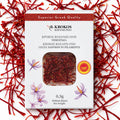
Saffron herbal tea with cinnamon and clove

Saffron κρόκος

Crocus sativus · Krokos Kozanis PDO

Clinical evidence
  • Calm
  • Everyday

Greece's red gold from Kozani, studied for mood.

Known for

  • Supports mood: improved mild-to-moderate low mood in clinical trials
  • Rich in antioxidants (crocin and safranal)
  • Studied for PMS symptoms
  • Studied for restful sleep
  • A warming, uplifting everyday ritual
What the research says
  • A meta-analysis of randomised trials found saffron improved symptoms of mild-to-moderate depression vs placebo (Yang 2018).
  • Saffron's crocin and safranal give it colour, aroma and antioxidant activity.

Good to know: Culinary amounts are safe; high doses not recommended in pregnancy.

Find it in our teas
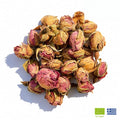
Whole dried Greek rosebuds from Grevena

Damask rose τριαντάφυλλο

Rosa damascena

Traditional use
  • Calm
  • Everyday

Whole rosebuds from Grevena: floral, honeyed and naturally sweet.

Known for

  • Calming and soothing, traditionally
  • Rich in antioxidant polyphenols
  • Gentle support for digestion
  • Studied for easing menstrual discomfort
  • Naturally sweet, floral and caffeine-free
What the research says
  • Traditionally used in Greek and Persian medicine for calm and digestion.
  • Rich in polyphenols; lab studies show antioxidant activity.

Good to know: Generally well tolerated.

Cold brew herbal tea →

Find it in our teas

*These statements have not been evaluated by the Food and Drug Administration. Our products are not intended to diagnose, treat, cure or prevent any disease. Study summaries link to full, referenced guides on our journal.

Shop

Not sure where to start?

Our best-selling blends, each built around the herbs above.

Greek Superherbs organic Ikaria Tea box with fresh rosemary, sage and dandelion flowers
4.97 (149)

Ikaria Blue Zone Tea

Certified organic · GreeceFrom$17.90 ($0.72/cup)
Mountain Tea (Mount Olympus) - Greek Superherbs
4.91 (44)

Mountain Tea (Mount Olympus)

Certified organic · GreeceFrom$16.90 ($0.85/cup)
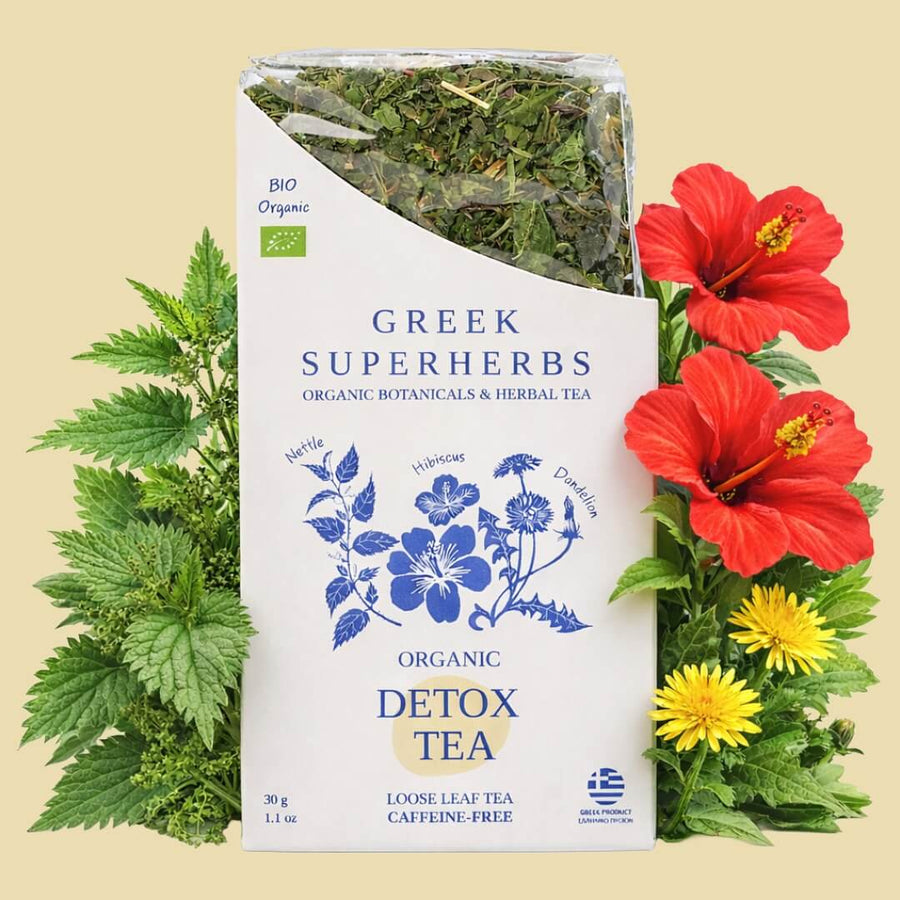
Detox Tea - Greek Superherbs
5.0 (26)

Detox Tea

Certified organic · GreeceFrom$18.90 ($0.95/cup)
Sleep Tea - Greek Superherbs
4.93 (28)

Sleep Tea

Certified organic · Greece$19.40 ($0.39/cup)
Join our newsletter

Subscribe and get 15% off your first order

Harvest news from Ikaria and Olympus, honey restock alerts, and the occasional recipe. One or two emails a month.

By subscribing you agree to our Privacy Policy. Unsubscribe any time.