
Most people searching for the best herbal tea for energy want the same thing: to feel sharper at 3 p.m. without another coffee and a restless night. The honest answer starts with one fact. Caffeine-free herbal teas do not give you energy the way caffeine does. Some of them can still help you feel more alert, and a few have small but real studies behind them. Here is which herbs those are, what the research actually measured, where tribulus fits in, and when tiredness is a reason to see a doctor rather than change your tea.
Key takeaways
- No herbal "caffeine": herbal teas don't block the brain's tiredness signal the way caffeine does. Expect a gentler lift in alertness, not a jolt.
- Best-studied for alertness: peppermint (as a tea and as an aroma), rosemary aroma, sage, and a Greek mountain tea extract all have small human studies showing better alertness, mood or attention.
- Tribulus: the human evidence for libido is mixed and weak, and most trials found no change in testosterone. It is a traditional ingredient, not a performance drug.
- The basics matter most: even mild dehydration raises fatigue in studies. A large, warm, caffeine-free cup is partly a hydration habit.
- See a doctor if: tiredness lasts for weeks despite sleep, or comes with weight change, low mood, snoring or breathlessness. Anaemia, thyroid problems, sleep apnoea and depression are common causes.
Featured in this article

Can herbal tea give you energy without caffeine?
Not in the way coffee does. Caffeine works by blocking adenosine, a chemical that builds up in the brain the longer you are awake and makes you feel sleepy. With the signal muted, you feel more awake, whether or not you are rested. When the caffeine wears off, the adenosine is still there. That is the familiar afternoon slump.
Herbs such as mountain tea, sage, peppermint and rosemary contain no caffeine and act on nothing that strong. What they can offer is quieter. Their aromatic oils, flavour and warmth seem to nudge alertness and mood a little. They add fluid to your day. They also give you a pause, the few minutes of stepping away from a screen that often help more than the drink itself.
So the right question isn't "which herbal tea has the most energy?" It is "which caffeine-free tea helps me feel clear-headed, without affecting my sleep?" That one has a better answer.

Best herbal tea for energy: what the research shows
The studies below are small, and several tested aromas or concentrated extracts rather than a cup of tea. Here is how the evidence stacks up:
- Traditional useMountain tea, sage and rosemary have long been drunk across Greece as restorative daytime teas. Tradition tells us they are well tolerated, not that they boost energy.
- Human studiesSmall controlled studies found that peppermint tea and aroma, rosemary aroma, sage leaf and a mountain tea extract improved alertness, mood or attention. Most ran for one day to four weeks.
- What's missingNo trial has tested a caffeine-free herbal tea for fatigue as a symptom, or compared one head-to-head with coffee.
1. Peppermint: the most direct "wake-up" herb
Peppermint has the best evidence of any caffeine-free tea for feeling alert. In a study of 180 young adults, those who drank peppermint tea reported feeling more alert and did better on memory tests 20 minutes later than those who drank chamomile or hot water. Chamomile did the opposite, leaving people calmer than peppermint did.1 An earlier study of 144 volunteers found similar effects from just smelling peppermint oil: better memory and higher alertness.2 Menthol's cool, sharp aroma seems to do much of the work, so breathe in the steam before you drink.
2. Rosemary: aroma and focus
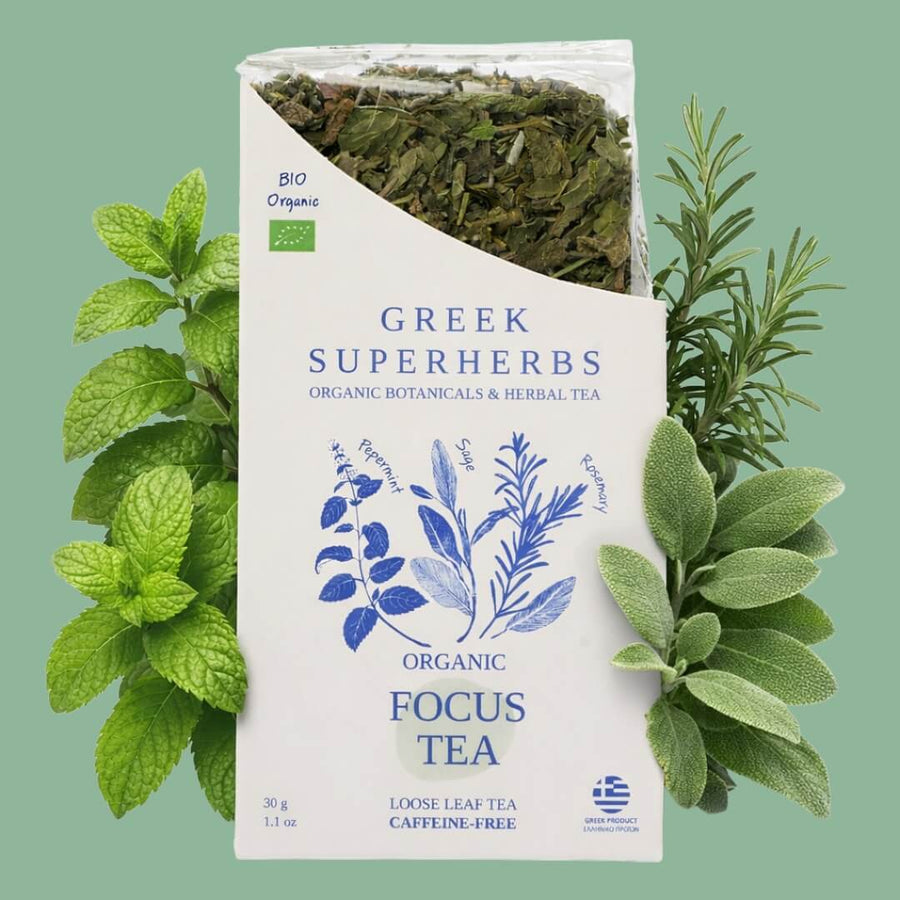
In a study of 20 volunteers, people who spent time in a room scented with rosemary oil did better on speed and accuracy tasks. The higher their blood levels of 1,8-cineole, one of rosemary's aromatic compounds, the better they performed.3 It's a tiny study of an aroma, not a tea, but rosemary tea releases the same compound in its steam. Our Focus Tea pairs rosemary with peppermint and sage for exactly this reason. There is more in our rosemary tea guide.
3. Sage: calm alertness
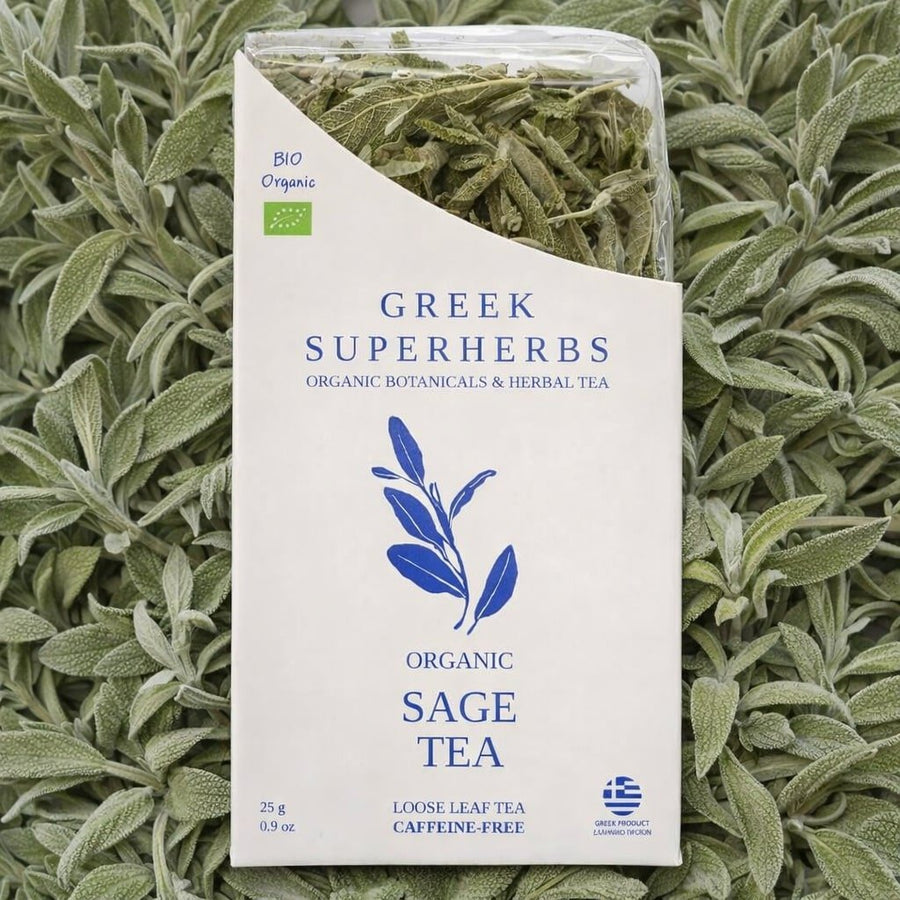
Sage has been studied for mood and memory. In a double-blind crossover trial, 30 healthy young adults took a single dose of dried sage leaf (300 or 600 mg) or a placebo. Both doses improved mood. The higher dose made people feel more alert and calm at the same time and improved task performance.4 That trial used common sage (Salvia officinalis) in capsules. Our tea uses Greek sage (Salvia fruticosa), a close relative that hasn't been tested the same way.
4. Greek mountain tea: steady focus, less anxiety
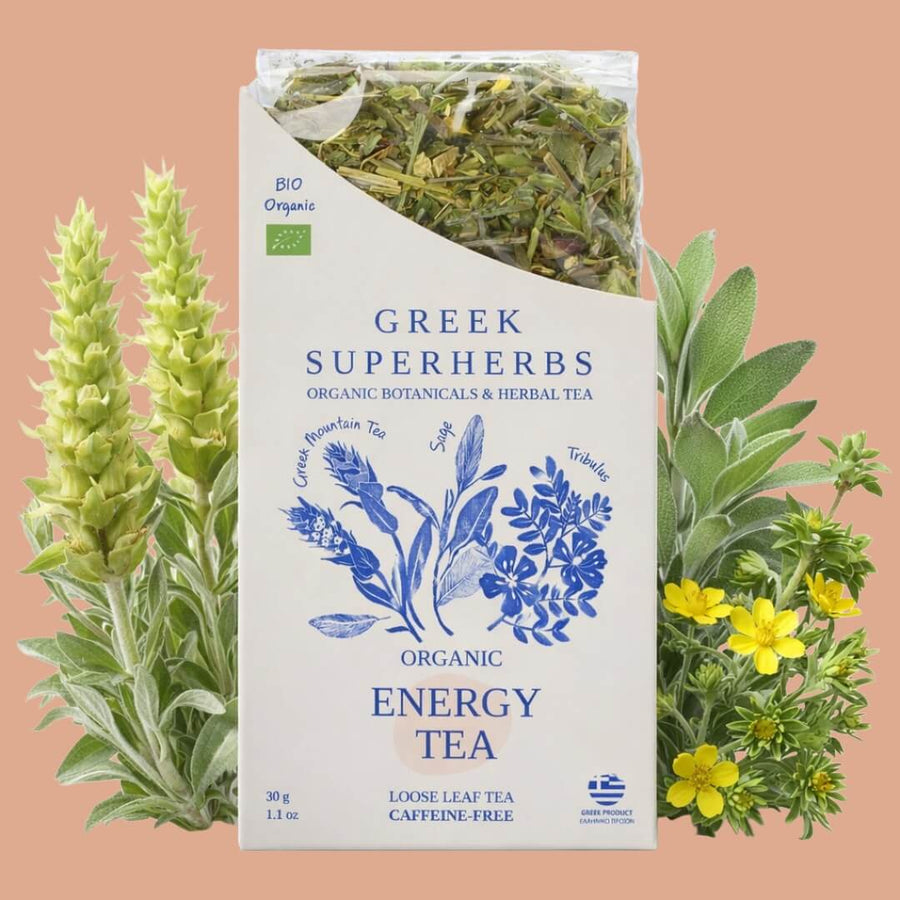
Mountain tea (Sideritis scardica) is the base of our Energy Tea. In a randomised, placebo-controlled trial, 155 adults aged 50–70 took a mountain tea extract for 28 days. At the higher dose (950 mg a day), they made fewer errors on a demanding attention task and reported lower anxiety.5 That's a useful profile for daytime drinking: clear, not wired. The extract was concentrated, so a cup of tea is a gentler version. For the full story, including coughs, digestion and brewing, read our complete guide to Greek mountain tea.
5. Water: the quiet energy fix
It sounds too simple, but it's measurable. When 25 healthy young women lost just 1.36% of their body weight in fluid, they reported more fatigue, less vigour, more headaches and more difficulty concentrating.6 A 12 oz mug of herbal tea is 12 oz of fluid, with no caffeine and no sugar unless you add it.
The best caffeine-free energy tea is the one that wakes up your senses, keeps you hydrated and leaves your sleep alone.
What about ginseng and maca?
You'll see ginseng, maca and other "adaptogens" in many energy products. They have their own research, with mixed results, and we don't sell them. Our blends stick to Greek herbs with a long record of everyday use as teas.
Shop the article



Tribulus, libido and tea for men
Tribulus terrestris, also called caltrop or puncture vine, grows wild around the Mediterranean. It has been used for centuries in Greek, Ayurvedic and Chinese traditions as a tonic for vitality. Today it is heavily marketed to men as a testosterone and libido booster. The research doesn't back up most of that marketing, and we'd rather tell you than oversell it.
- Testosterone: a 2025 systematic review of ten clinical studies found that eight showed no significant change in testosterone or other male hormones. The two that did involved men with hypogonadism, and the rise was small (about 60–70 ng/dL).7
- Sexual function in men: in the same review, tribulus extract at 400–750 mg a day for one to three months improved erectile function in three of the five trials that measured it. The reviewers rated the level of evidence as low.7
- Libido in women: a few small trials have reported improvements in women's sexual function, but larger studies are needed to confirm them.8
- Athletic performance: trials have not found gains in strength, muscle mass or performance.8
The trials also used concentrated extracts, typically several hundred milligrams a day. A cup of tea with tribulus in the blend is a traditional drink, not a dose from those studies. If you are looking for "mountain tea benefits for men," the evidence-based answer is the same as for everyone: caffeine-free focus, calm and a well-tolerated daily habit. Any change in sexual function or energy that worries you is worth a conversation with your doctor. It can be an early sign of heart disease, diabetes or hormone problems.

How to brew a caffeine-free energy tea
Whole-leaf herbs like mountain tea need hotter water and more time than green tea. This is the method for our Energy Tea:
- Measure: 1–2 teaspoons of the blend per 12 oz / 350 ml of water.
- Simmer: bring the water to the boil, lower the heat and simmer the herbs gently for 5–7 minutes. Covering the pot keeps the aromatic oils in.
- Breathe it in: strain into a mug and take a few slow breaths of the steam before your first sip. Much of peppermint's and rosemary's effect in studies came from aroma.
- Cold option: put 1–2 teaspoons in a jar with 12 oz of filtered water, shake, and refrigerate for 12–14 hours. Strain and serve over ice. Our cold brew herbal tea guide has more ideas.
| When | What to drink | Why |
|---|---|---|
| Morning, instead of a second coffee | Energy Tea | Mountain tea and sage for calm focus, no caffeine |
| Mid-afternoon slump | Focus Tea | Peppermint and rosemary aroma for alertness |
| Evening | Plain mountain tea | Caffeine-free and gentle, won't affect sleep |
| Hot day | Any of the above, cold-brewed | Hydration first |
Browse all our caffeine-free blends in the energy tea collection.
When tiredness needs a doctor, not a tea
Ordinary tiredness improves with sleep, food, movement and a lighter week. Fatigue that doesn't improve deserves a proper look, because many of its causes are common and treatable.9
- Anaemia, including iron deficiency. This is especially common with heavy periods, a plant-based diet or blood loss.
- Thyroid problems. Watch for feeling cold, dry skin, constipation or weight change.
- Sleep apnoea and other sleep disorders. Loud snoring, pauses in breathing or waking unrefreshed are clues.
- Depression or grief. Low mood, loss of interest and poor sleep often show up first as exhaustion.
- Medications, alcohol, infections, diabetes and heart problems can also cause fatigue.
Book an appointment if tiredness lasts more than a few weeks, or comes with fever, night sweats, unexplained weight loss or breathlessness. Get urgent help for confusion, fainting or thoughts of harming yourself.9
Safety and who should skip it
Allergy: mountain tea, sage, peppermint and rosemary are all in the mint family. Avoid them if you react to mint-family plants.10
Pregnancy and breastfeeding: the EMA does not recommend mountain tea or sage as remedies during pregnancy or breastfeeding because safety hasn't been established.10,11 Tribulus hasn't been studied in pregnancy either. Please skip energy blends and ask your doctor or midwife.
Children: the EMA doesn't recommend sage or mountain tea as remedies for under-18s.10,11 These blends are made for adults.
Medications: tribulus may add to the effects of blood pressure, diabetes and diuretic medicines. Rare cases of liver and kidney injury have been reported in people taking tribulus supplements.8 If you take prescription medicines, or have liver, kidney or heart disease, check with your doctor before drinking it daily.
How much: 1–3 cups a day. Sage contains thujone, so keep sage-containing teas to normal amounts and don't brew them extra-strong for long periods.11
Herbal tea for energy FAQ
What is the best herbal tea for energy?
For feeling alert without caffeine, peppermint has the most direct evidence. A tea with peppermint and rosemary, such as our Focus Tea, suits an afternoon slump. For steadier, calm focus, a blend based on Greek mountain tea and sage, such as our Energy Tea, is a good daily choice. Neither works like caffeine.
Which herbal tea gives you energy without caffeine?
No caffeine-free tea is a true stimulant. Peppermint, rosemary, sage and Greek mountain tea have small studies showing better alertness, mood or attention. Staying well hydrated also reduces fatigue.
What are the benefits of mountain tea for men?
The same as for women: it is caffeine-free, well tolerated, and a 28-day extract trial found better attention and lower anxiety in adults aged 50–70. There is no evidence that mountain tea raises testosterone.
Does Greek mountain tea have caffeine?
No. Greek mountain tea (Sideritis) is naturally caffeine-free, as are all our herbal blends, including Energy Tea.
Does tribulus increase libido or testosterone?
The evidence is weak. Most trials found no change in testosterone. A few small studies reported better sexual function, but the quality of evidence is low. The trials used concentrated extracts, not tea.
When is the best time to drink energy tea?
Mid-morning or early afternoon, when you'd otherwise reach for another coffee. Because it's caffeine-free, a late-afternoon cup won't keep you up at night.
Can I drink an energy herbal tea every day?
Yes, 1–3 cups a day is a typical amount for healthy adults. Skip blends with sage and tribulus if you're pregnant or breastfeeding, and check with your doctor if you take regular medication.
A caffeine-free tea won't replace a good night's sleep, and it isn't meant to. What it can do is give you a clear-headed pause, a real drink of water and a flavour that wakes up your senses, without borrowing energy from tonight. Start with one cup where your second coffee used to be.
Shop the article


Keep reading: Greek mountain tea: the complete guide · The best tea before a workout · Sage and rosemary tea for memory
Sources
- Moss M, Jones R, Moss L, Cutter R, Wesnes K. Acute consumption of peppermint and chamomile teas produce contrasting effects on cognition and mood in healthy young adults. Plant Science Today. 2016;3(3):327–336.
- Moss M, Hewitt S, Moss L, Wesnes K. Modulation of cognitive performance and mood by aromas of peppermint and ylang-ylang. Int J Neurosci. 2008;118(1):59–77.
- Moss M, Oliver L. Plasma 1,8-cineole correlates with cognitive performance following exposure to rosemary essential oil aroma. Ther Adv Psychopharmacol. 2012;2(3):103–113.
- Kennedy DO, Pace S, Haskell C, et al. Effects of cholinesterase inhibiting sage (Salvia officinalis) on mood, anxiety and performance on a psychological stressor battery. Neuropsychopharmacology. 2006;31:845–852.
- Wightman EL, et al. The acute and chronic cognitive and cerebral blood flow effects of a Sideritis scardica (Greek mountain tea) extract. Nutrients. 2018;10(8):955.
- Armstrong LE, Ganio MS, Casa DJ, et al. Mild dehydration affects mood in healthy young women. J Nutr. 2012;142(2):382–388.
- Vilar Neto JO, et al. Effects of Tribulus (Tribulus terrestris L.) supplementation on erectile dysfunction and testosterone levels in men: a systematic review of clinical trials. Nutrients. 2025;17(7):1275.
- Memorial Sloan Kettering Cancer Center. Tribulus terrestris: About Herbs.
- MedlinePlus, U.S. National Library of Medicine. Fatigue.
- European Medicines Agency, HMPC. European Union herbal monograph on Sideritis herba. 2016.
- European Medicines Agency, HMPC. European Union herbal monograph on Salvia officinalis L., folium (Revision 1). 2017.
This article is for general information and is not medical advice. These statements have not been evaluated by the FDA. Our products are not intended to diagnose, treat, cure or prevent any disease. If you are pregnant, nursing, taking medication or have a medical condition, talk to your doctor first.