

Dittany grows where almost nothing else can: in cracks on the limestone cliffs and gorges of Crete, out of reach of goats and most people. Cretans call it diktamo or erontas, and they've brewed it as dittany tea for stomach upsets and winter coughs for as long as anyone can remember. The ancient Greeks wrote about it too. This guide covers what dittany of Crete is, where its legends come from, what the research does and doesn't show, how to brew it, who should avoid it, and the other herbal teas Crete is known for.
Key takeaways
- What it is: Origanum dictamnus, a woolly, silver-leaved relative of oregano that grows wild only on Crete. It is naturally caffeine-free.
- Officially recognised: the European Medicines Agency lists dittany as a traditional herbal remedy for coughs with colds, mild digestive upset, and (applied to the skin) minor inflammation and bruises.
- What the science shows: lab studies find strong antimicrobial and antioxidant activity, mostly from carvacrol. We found no published clinical trials of dittany tea in people.
- How to brew: about 1–2 g (a heaped teaspoon) per cup of boiling water, covered, for 3–4 minutes.
- Who should skip it: anyone who is pregnant or breastfeeding, and anyone allergic to mint-family plants.
Featured in this article

What is dittany of Crete?
Dittany of Crete (Origanum dictamnus) is a small perennial in the mint family (Lamiaceae), in the same genus as oregano and marjoram. It has round, grey-green leaves covered in soft white down and, in summer, pinkish-purple flowers that hang in hop-like clusters. Crush a leaf and you get a warm, oregano-like smell with a softer, sweeter edge.
The plant has many names. In Greek it is diktamo (δίκταμο). English speakers write it as dittany, dictamnus, dictamus or diktamos, and all of these mean the same herb. It has nothing to do with Dictamnus albus, the unrelated "burning bush" sold as "white dittany" in some garden centres.
Where it grows, and why it is protected
Dittany is found wild only on Crete. It grows in cracks on calcareous cliffs and in gorges, from near sea level up to about 1,900 m, and is known from around 60 to 70 locations on the island's mountains.1 Collecting it was dangerous work. Gatherers dangled from ropes over the gorges, which is said to be where the local name erontas, from Eros, comes from: only someone deeply in love would take that risk.
The wild plant is legally protected in Greece (Presidential Decree 67/1981) and is listed under the Bern Convention and the EU Habitats Directive.1,2 Wild plants shouldn't be picked. Cretan farmers have grown dittany since the 1920s, and that cultivation now meets commercial demand. It is one reason the IUCN's 2026 assessment rates the species as Least Concern, conditional on protection and cultivation continuing (earlier assessments listed it as Near Threatened).1,2

Dittany in myth and ancient medicine
Few herbs have a written history this long. The best-known story, retold by Aristotle, Theophrastus and later Plutarch, is that wild Cretan goats wounded by hunters' arrows would look for dittany, eat it, and push the arrows out.1,2 In Virgil's Aeneid, Venus picks dittany on Mount Ida in Crete to heal Aeneas's arrow wound.2
Physicians used it too. Texts attributed to Hippocrates recommend it in childbirth, to help expel the placenta, and Dioscorides listed it for wounds and for childbirth.2 Those old uses are one reason modern guidance says dittany should not be taken during pregnancy (more on that below). Dittany was traded across the ancient Mediterranean, and in modern Crete it is still a household remedy for the stomach, for colds, and on the skin for bruises.3
Legend says wounded goats went looking for it. Today dittany is simply the tea a Cretan grandmother makes when the stomach is unsettled.
Dittany tea benefits: what the research shows
Many websites list a dozen benefits of dittany tea: cholesterol, bones, mood, headaches. Very little of that has been tested in people. Here is what each type of evidence actually supports:
- Official recognitionIn 2013 the European Medicines Agency accepted long-standing use of dittany for coughs with colds, mild digestive complaints, and minor skin inflammation and bruises. This is a "traditional use" listing.
- Human trialsWe could not find any published controlled trial of dittany tea or dittany extract in people.
- Lab studiesThe essential oil is rich in carvacrol and kills a wide range of bacteria and fungi in the test tube. The tea itself contains antioxidant phenolic compounds.
1. A traditional remedy for mild stomach upsets
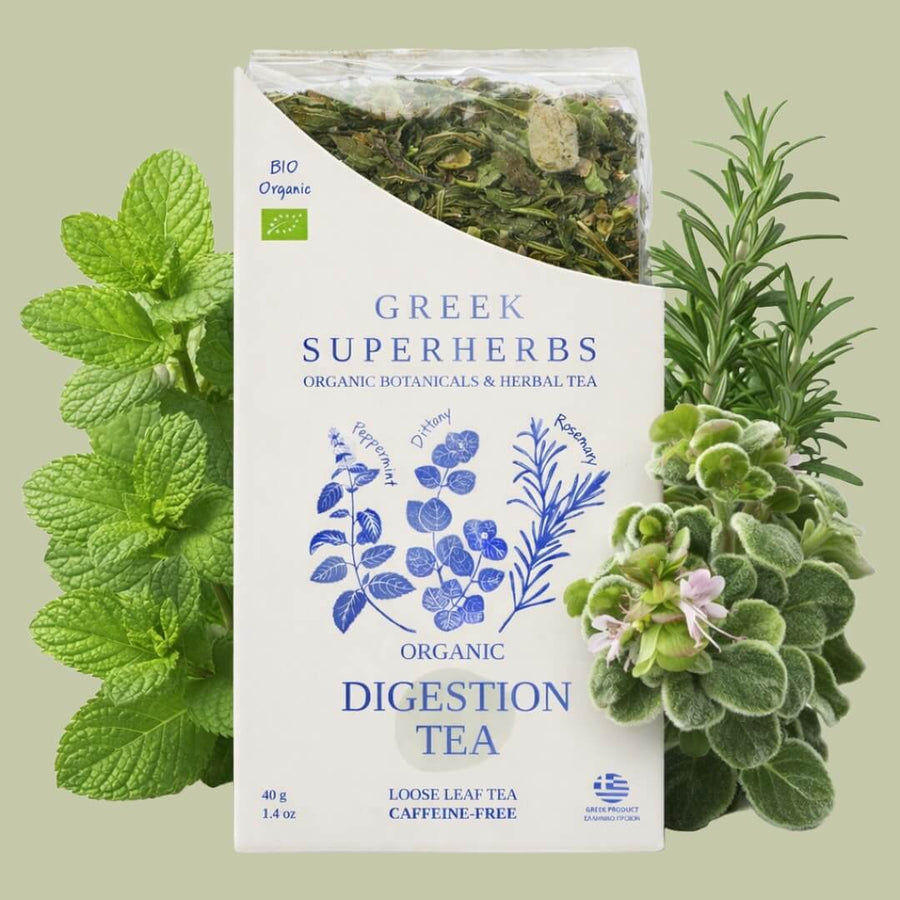
This is the classic Cretan use: a cup after a heavy meal, or when the stomach feels crampy and unsettled. The EMA monograph lists dittany "for the relief of mild gastrointestinal disorders," based on its long record of use rather than on trials.4 It's why dittany is the base of our Digestion Tea, alongside peppermint and rosemary. If digestive symptoms last more than two weeks, see a doctor. For the herbs with the most evidence, see our guide to the best herbs for gut health.
2. Coughs and colds
The same monograph accepts dittany for easing a cough associated with a cold.4 In Greek homes it's drunk hot with honey, much like Greek mountain tea. See a doctor if a cough lasts more than a week, or if you have a high fever, shortness of breath or discoloured phlegm.
3. Antimicrobial and antioxidant activity (lab only)
Dittany's essential oil is dominated by carvacrol (roughly 43–71% in published analyses), with p-cymene and γ-terpinene. It's the same family of aromatic compounds that gives oregano tea its bite.2 Reviews describe antibacterial, antifungal and antioxidant effects in lab tests.3
What's in the cup matters more. Greek researchers analysed traditional dittany decoctions and found carvacrol, rosmarinic acid, caffeic acid, apigenin derivatives and a high total phenolic content. The decoctions were active against several bacteria and Malassezia yeasts in the lab.5 That's a sound reason for the traditional uses, but a lab dish is not a stomach. The honest summary: a well-studied plant chemically, and an unstudied one clinically.

How to make dittany tea
Dittany is strongly aromatic, so a little goes a long way. Steep it too long and it turns bitter.
- Measure: 1 heaped teaspoon (about 1–2 g) of dried leaves and flowers per 5–8 oz / 150–240 ml cup.
- Pour: use freshly boiled water.
- Cover and steep for 3–4 minutes. Covering keeps the aromatic oils in the cup rather than in the air.
- Strain and sweeten if you like: a teaspoon of honey and a slice of lemon is the Cretan way. No honey for babies under 12 months.
| Question | Answer |
|---|---|
| Taste | Warm and herbal, like a softer, sweeter oregano, with a slightly bitter finish |
| How many cups | 1–3 cups a day. The EMA's traditional-use dose is up to three cups a day |
| Best time | After meals for digestion, or in the evening. It is caffeine-free |
| Iced | Brew double strength, cool, then pour over ice with lemon |
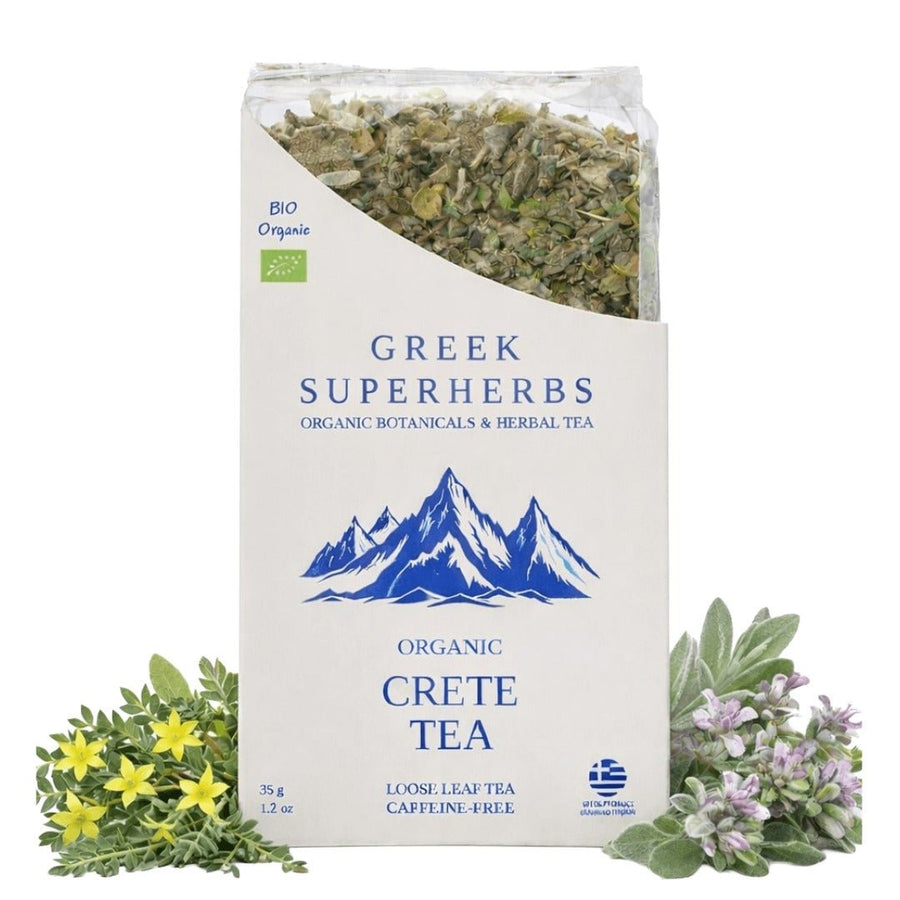
On its own, dittany is quite strong, which is why Cretans often blend it. Sage and tribulus in our Crete Tea round it out, and peppermint and rosemary in the Digestion Tea make it brighter.
Shop the article



Dittany tea side effects and safety
At normal tea amounts, the EMA monograph lists no known side effects or drug interactions.4 It does list clear cautions:
Pregnancy and breastfeeding: not recommended. Safety hasn't been studied, and dittany was historically used to bring on childbirth and expel the placenta. Avoid it if you are pregnant, trying to conceive or breastfeeding.
Allergy: don't drink it if you're allergic to mint-family plants such as oregano, thyme, sage, mint or rosemary. This is the only formal contraindication.
Children: the EMA doesn't recommend it as a remedy for under-18s because of limited data. Ask your paediatrician.
Essential oil: dittany or oregano essential oil is not a stronger tea. Take essential oils internally only with your physician's OK.
When to see a doctor: if a cough lasts more than a week, or digestive symptoms more than two weeks, or you have warning signs such as blood in the stool, unexplained weight loss or a high fever.
Other Cretan herbal teas: malotira, sage and tribulus
"Cretan tea" usually means one of four herbs, drunk alone or blended. They have very different amounts of evidence behind them:
| Cretan tea | Plant | Traditional use | Evidence |
|---|---|---|---|
| Diktamo (dittany) | Origanum dictamnus | Stomach upsets, colds, bruises | EMA traditional use; lab studies |
| Malotira (mountain tea) | Sideritis syriaca | Coughs, colds, digestion | EMA traditional use; one extract trial in a related species |
| Faskomilo (Cretan sage) | Salvia fruticosa | Sore throat, digestion | Traditional; mostly lab studies |
| Trivoli (tribulus) | Tribulus terrestris | Energy, vitality | Weak; trials don't show a testosterone effect |
Malotira (Sideritis syriaca)
Malotira is Crete's mountain tea, a Sideritis species. The EMA covers it in the same monograph as the mainland species, for coughs with colds and mild digestive discomfort.6 For the full story, including the research and brewing guide, see our Greek mountain tea guide.
Cretan sage (Salvia fruticosa)
Greek or Cretan sage is a different species from common garden sage (Salvia officinalis). It is softer and more eucalyptus-scented, and it's the sage Greeks drink as faskomilo. In 2016 the EMA reviewed it and concluded it didn't have enough documentation to write a monograph.7 That doesn't mean it's unsafe. It means the evidence rests on tradition and lab work. Use it as an everyday tea, not a treatment, and avoid concentrated sage during pregnancy. More in our guide to sage and rosemary tea.

Tribulus (Tribulus terrestris)
Tribulus is a low, spiny Mediterranean plant with a long folk reputation as a tonic for energy and vitality. It is heavily marketed as a testosterone booster. The evidence doesn't back that up. A 2024 systematic review of "testosterone booster" ingredients found that tribulus did not raise testosterone compared with placebo in any of the groups studied.8 Results for sexual function are mixed and come from small studies.9
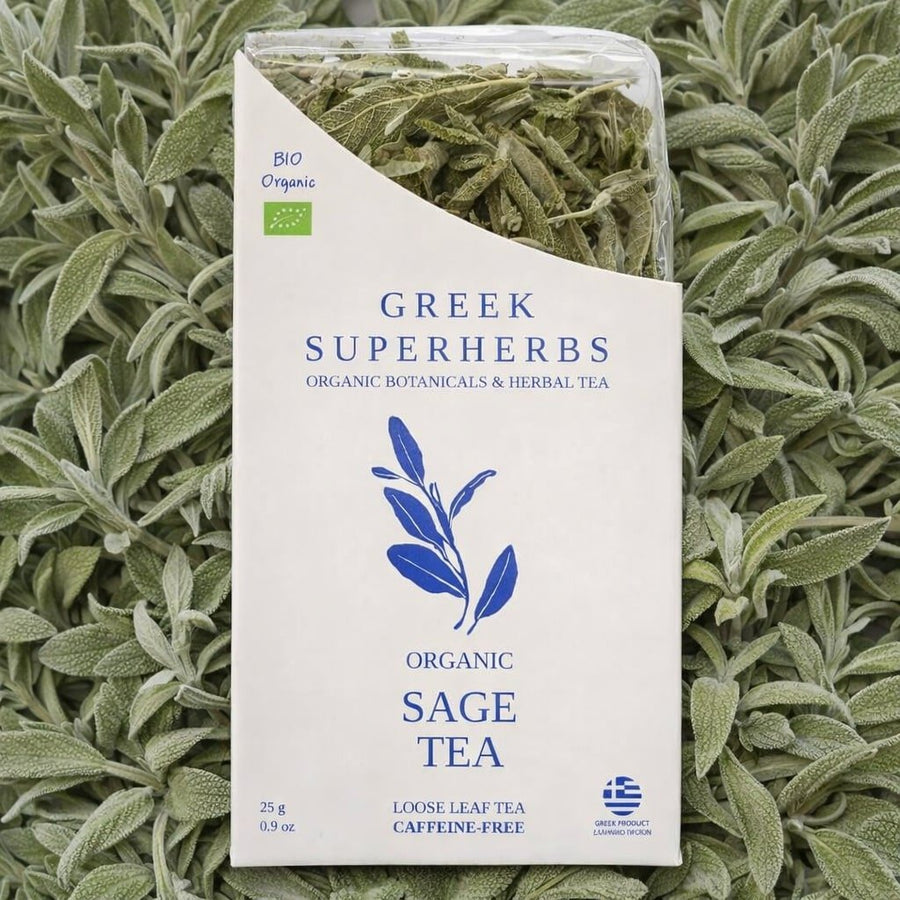
High-dose tribulus supplements have also been linked to rare cases of liver and kidney injury, and may add to the effects of blood-sugar and blood-pressure medicines.9 The small amount in a cup of blended tea is very different from a concentrated capsule. Still, check with your doctor if you take those medicines, have liver or kidney disease, or have a hormone-sensitive condition. We include tribulus in Crete Tea for its traditional place in Cretan blends, not as a performance product.
Dittany tea FAQ
What is dittany tea good for?
Traditionally, dittany tea is used for mild stomach upsets and for coughs with colds. The European Medicines Agency recognises both as traditional uses. Lab studies show antimicrobial and antioxidant activity, but it hasn't been tested in clinical trials in people.
Are diktamo, dictamus and dictamnus tea the same thing?
Yes. Diktamo, diktamos, dictamus, dictamnus, erontas and Cretan dittany all refer to Origanum dictamnus, the dittany of Crete. It is not the same as Dictamnus albus, an unrelated garden plant.
What does dittany tea taste like?
Warm, herbal and aromatic, like a softer, sweeter oregano, with a slightly bitter finish if steeped too long. Honey and lemon suit it well.
How do you make dittany tea?
Use about 1 heaped teaspoon (1 to 2 g) of dried dittany per cup of freshly boiled water. Cover and steep for 3 to 4 minutes, then strain.
Can I drink dittany tea every day?
Most adults can enjoy 1 to 3 cups a day. As a remedy, the EMA suggests seeing a doctor if digestive symptoms last more than two weeks or a cough more than a week.
Is dittany tea safe during pregnancy?
No. The EMA does not recommend dittany during pregnancy or breastfeeding, and it was historically used to bring on childbirth. Avoid it if you are pregnant or trying to conceive.
What is Cretan tea?
Cretan tea usually means one of Crete's traditional herbal teas: dittany (diktamo), malotira (Cretan mountain tea), Cretan sage, or a blend of these. Our Crete Tea combines dittany, Greek sage and tribulus.
Is it legal to pick dittany of Crete?
Wild dittany is a protected species in Greece, so wild plants should be left alone. Commercial demand is met by dittany cultivated on Crete.
Dittany is one of the oldest herbs in Greek writing and still one of the most useful plants in a Cretan kitchen. The evidence for it is honest but limited: official recognition as a traditional remedy, promising chemistry, and no clinical trials yet. Brew a cup after dinner and taste a piece of Crete.
Shop the article

Keep reading: Greek mountain tea benefits · Best herbs for gut health · Oregano tea benefits
Sources
- IUCN. Cretan dittany: the hairiest Greek legend. IUCN blog, July 2026.
- Skoufogianni E, et al. Ecology, cultivation, and utilization of the dittany of Crete (Origanum dictamnus L.) from ancient times to the present: a short review. Agronomy. 2024;14(5):1066.
- Liolios CC, Graikou K, Skaltsa E, Chinou I. Dittany of Crete: a botanical and ethnopharmacological review. J Ethnopharmacol. 2010;131(2):229–241.
- European Medicines Agency, HMPC. Community herbal monograph on Origanum dictamnus L., herba. Adopted 9 July 2013.
- Varsani M, Graikou K, Velegraki A, Chinou I. Phytochemical analysis and antimicrobial activity of Origanum dictamnus traditional herbal tea (decoction). Nat Prod Commun. 2017;12(11).
- European Medicines Agency, HMPC. European Union herbal monograph on Sideritis scardica, S. clandestina, S. raeseri, S. syriaca, herba. Adopted 2 February 2016.
- European Medicines Agency, HMPC. Public statement on Salvia fruticosa Mill., folium. EMA/HMPC/599993/2014, 31 May 2016.
- Morgado A, Tsampoukas G, Sokolakis I, et al. Do "testosterone boosters" really increase serum total testosterone? A systematic review. Int J Impot Res. 2024;36:348–364.
- Memorial Sloan Kettering Cancer Center. About Herbs: Tribulus terrestris.
This article is for general information and is not medical advice. These statements have not been evaluated by the FDA. Our products are not intended to diagnose, treat, cure or prevent any disease. If you are pregnant, nursing, taking medication or have a medical condition, talk to your doctor first.


