
In Greece, oregano isn't only for the salad and the grill. On Ikaria and across the islands, a pinch of the dried wild herb goes into hot water when a throat feels scratchy or a long lunch sits heavy. Oregano tea is sharp, warming and a little bitter. Here are the real oregano tea benefits, what the research does and doesn't show, the best time to drink it, whether you can drink it every day, and how to make a cup that tastes good.
Key takeaways
- What it is: an infusion of dried or fresh oregano leaves and flowers. Naturally caffeine-free.
- What it's good for: traditionally, after-meal digestion and comfort during colds. Its compounds (rosmarinic acid, carvacrol, thymol) are antioxidant and antimicrobial in the lab, but there are no clinical trials of oregano tea itself.
- Tea is not oil: oregano essential oil is far more concentrated, so it is never drunk like tea; take it internally only with your physician's OK.
- How much: ½–1 teaspoon of dried oregano per cup, steeped covered for 5–10 minutes. 1–2 cups a day is a sensible everyday amount.
- Who should be careful: anyone allergic to mint-family herbs, and people who are pregnant. Medicinal amounts may interact with blood thinners and diabetes medicines.
Featured in this article


What is oregano tea?
Oregano tea is simply oregano steeped in hot water. The oregano Greeks use is usually Origanum vulgare subsp. hirtum, known as Greek oregano or rigani. It grows wild on dry, rocky hillsides and belongs to the mint family (Lamiaceae), with thyme, sage and rosemary. Its cousin, dittany of Crete, is a famous tea herb too; see our guide to Cretan dittany tea.
Wild oregano tea is made from plants gathered on the hillside rather than grown in rows. Sun, heat and poor soil tend to produce smaller, more pungent plants, which is what you want in a cup. Our wild oregano from Ikaria is wildcrafted on the island and works for both the teapot and the kitchen.
Dried or fresh? Both work. Dried oregano is more concentrated; fresh sprigs give a greener, softer cup. Old ground oregano from the spice rack is the weakest option; most of its aroma has faded.

Oregano tea benefits: what the research shows
Most online lists of the benefits of oregano tea borrow results from oregano oil studies in test tubes. Here is what each kind of evidence actually supports:
- Traditional useDrunk across Greece for digestion after meals and comfort during colds. Unlike mountain tea or thyme, oregano has no EU herbal monograph.
- Human studiesVery few, and none of plain oregano tea. One small trial of an oregano water distillate saw better cholesterol numbers.
- Lab and animalPlenty. Oregano's compounds are antioxidant, antimicrobial and anti-inflammatory in cells and animals, mostly as concentrated oils or extracts.
1. Antioxidants in every cup
The main compound in oregano tea is rosmarinic acid, a water-soluble polyphenol also found in rosemary and sage. A lab study of Origanum vulgare found it was the most abundant phenolic acid in infusions and decoctions, alongside flavonoids such as luteolin. The water preparations were strongly antioxidant in test-tube assays, and a gentle simmer extracted the most.1 Whether that matters inside the body hasn't been measured.
2. Oregano tea benefits for the stomach
This is the most common use in Greek homes: a warm cup after a heavy meal. Its compounds are antimicrobial and anti-inflammatory in lab studies, which makes the tradition plausible,2 but no clinical trial has tested oregano tea for bloating or indigestion. Treat it as an after-dinner ritual, not a remedy. If stomach symptoms last more than two weeks, or you have pain, weight loss or blood in the stool, see a doctor.
3. Colds, coughs and sore throats
Carvacrol and thymol, oregano's signature compounds, kill bacteria and fungi in laboratory tests. A 2017 review of oregano oils notes that this evidence comes almost entirely from cell and animal studies, and that clinical studies are still needed.2 A hot cup with honey and lemon is soothing and hydrating. It won't kill a virus or replace medical care for a chest infection.
4. Heart and cholesterol: one small signal
In a 2008 study of 48 people with mildly high cholesterol, those who drank 25 ml of a water distillate of Origanum onites, a related oregano, after each meal for three months had better LDL and HDL cholesterol and blood-vessel function than those given lifestyle advice alone.3 It was small, not placebo-controlled, and used a distillate rather than tea: interesting, not proof.
Oregano tea is a flavourful, caffeine-free habit with interesting chemistry. It isn't medicine, and it shouldn't be sold as if it were.
Oregano tea vs oregano oil
Oregano essential oil is steam-distilled from large amounts of plant and is very high in carvacrol. Most of the dramatic antimicrobial results online come from these oils. A cup of oregano tea extracts mainly water-soluble compounds such as rosmarinic acid, with only a small share of the volatile oils.1
| Oregano tea | Oregano essential oil | |
|---|---|---|
| Main compounds | Rosmarinic acid, flavonoids, a little carvacrol and thymol | Concentrated carvacrol and thymol |
| Strength | Mild, food-like | Very strong; irritating undiluted |
| How it's used | Drunk as an infusion, 1–2 cups a day | Diluted, on the skin or in a diffuser |
| Safe to drink? | Yes, in normal amounts | Internal use only with your physician's OK |
Our oregano essential oil is far stronger than tea. Use it diluted on the skin, and take it internally only if your physician has approved it and told you how much.
Best time to drink oregano tea
There's no research on timing, so this is tradition and comfort:
- After meals: the classic Greek moment, 20–30 minutes after lunch or dinner.
- Evening: it's caffeine-free, so it won't keep you awake.
- When you have a cold: 2–3 warm cups spread through the day, with honey and lemon.
- Not with iron-rich meals, if iron is a concern: herbal teas drunk with a meal cut absorption of plant-based (non-haem) iron by about half or more in one study.4 Oregano wasn't tested but is rich in similar polyphenols. If you're low in iron, vegetarian or pregnant, drink it an hour or two away from meals.
Can I drink oregano tea on an empty stomach?
For most people, yes; there's no evidence it's harmful. But a strong brew first thing can feel harsh on a sensitive stomach or aggravate reflux. Start with a weaker cup (½ teaspoon, 5 minutes) or have it after breakfast.
Can you drink oregano tea every day?
Yes, in normal amounts. Oregano is eaten daily across the Mediterranean, and 1–2 cups a day of a normal-strength infusion is in line with that. Many Greeks drink it in spells and rotate it with mountain tea, sage or chamomile, which is a sensible pattern.
What we'd avoid: very strong brews many times a day for weeks, capsules or extracts without medical advice, and taking the essential oil internally without your physician's OK. If you're pregnant or take regular medication, ask your doctor first.
Shop the article




How to make oregano tea
Oregano is strong, so it needs less herb than most teas. Cover the cup to keep the aromatic oils in the tea.
- Measure: ½–1 teaspoon of dried oregano per 8 oz / 240 ml cup, or 2–3 fresh sprigs. Start with ½ teaspoon if you're new to it.
- Heat: bring water to a boil and let it settle for a few seconds.
- Cover and steep for 5–10 minutes: five for a light cup, ten for a stronger, more bitter one. Village style is a gentle 2–3 minute simmer.
- Strain and flavour: add honey and lemon to taste, then sip warm.
| Style | How much | How long |
|---|---|---|
| Dried oregano (everyday) | ½–1 tsp per 8 oz | 5–10 min, covered |
| Fresh oregano | 2–3 sprigs (about 1 tbsp leaves) per 8 oz | 5–7 min, covered |
| Traditional (for a cold) | 1 tsp dried per 8 oz | Simmer 2–3 min, rest 5 min |
How to make oregano tea taste better
- Honey: the best partner. A dark, caramel-like honey such as raw Ikaria heather honey rounds off the bitterness. Never give honey to babies under 12 months.
- Lemon: a squeeze brightens the cup.
- Soften it with a gentler herb: half oregano, half Greek mountain tea makes a mellow, golden brew. Mint or chamomile also work.

Thyme and oregano tea, and other blends
Thyme and oregano tea is a classic Greek winter pairing. The two herbs share the same aromatic compounds, thymol and carvacrol, in different proportions. Thyme has the stronger official backing: the European Medicines Agency recognises it as a traditional remedy for chesty coughs with colds.5 Use ½ teaspoon of each per cup, covered, for 7 minutes. The combination itself hasn't been studied, so expect comfort rather than a cure.
- Oregano + mountain tea: soft and floral, the easiest way in. See our Greek mountain tea guide.
- Oregano + sage: earthy and savoury; keep the sage to a pinch.
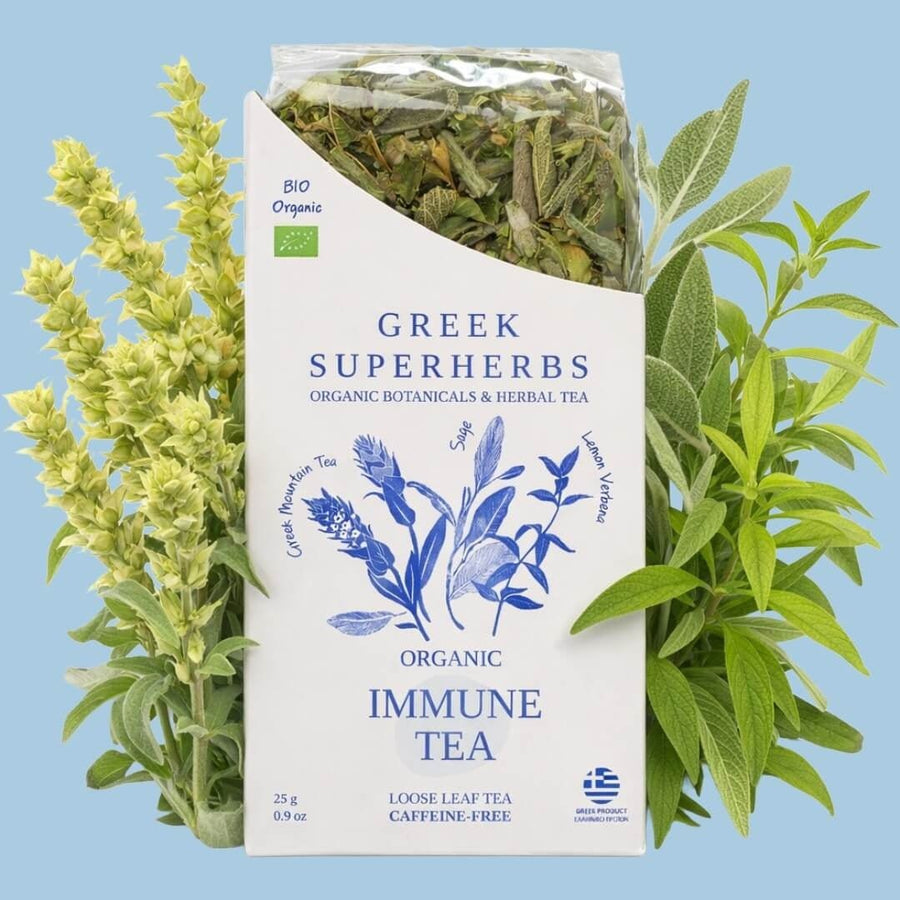
If you'd rather not blend your own, our Immune Tea is a gentler cold-season option. It blends mountain tea, sage and lemon verbena (no oregano), so it's softer on the palate. Or browse our cold-season herbal teas.
Oregano tea side effects and safety
At normal amounts oregano tea is well tolerated by most people, though strong brews can upset a sensitive stomach. A few groups should take more care:
Allergy: oregano allergy is rare, but serious reactions after eating oregano and thyme have been reported in people sensitive to mint-family (Lamiaceae) plants.6 If thyme, basil, sage or mint cause you itching or swelling, avoid it.
Pregnancy and breastfeeding: oregano as a food seasoning is fine. Medicinal amounts (several strong cups a day, extracts or oil) are not recommended in pregnancy because safety hasn't been established, and there's little data for breastfeeding. Ask your doctor or midwife.
Children: an occasional weak, cooled cup is a food-level amount. Don't give children oregano extracts or essential oil, and no honey under 12 months.
Medications: in lab and animal studies, oregano compounds can slow blood clotting and lower blood sugar. These interactions are theoretical and mainly relevant at supplement doses, but if you take blood thinners, antiplatelets or diabetes medicines, talk to your doctor before drinking it daily. Stop medicinal amounts two weeks before surgery.
Iron and oil: drink it between meals if you have low iron. Take the essential oil internally only if your physician has approved it, and exactly as directed.

Oregano tea FAQ
What is oregano tea good for, and what does it do?
Traditionally, it's used to settle the stomach after meals and for comfort during colds and sore throats. It contains antioxidant rosmarinic acid plus some carvacrol and thymol, which are antimicrobial in lab studies. There are no clinical trials of the tea itself, so think of it as a caffeine-free habit, not a treatment.
What is the best time to drink oregano tea?
Most Greeks drink it 20–30 minutes after a meal, or in the evening since it's caffeine-free. During a cold, 2–3 warm cups with honey and lemon is traditional. If you have low iron, drink it between meals.
Can I drink oregano tea every day?
Yes. 1–2 cups a day of a normal-strength infusion (½–1 teaspoon of dried oregano per cup) is sensible for healthy adults. Check with your doctor first if you're pregnant or take blood thinners or diabetes medicines.
Can I drink oregano tea on an empty stomach?
Usually, yes, but a strong cup can feel harsh on a sensitive stomach. Start with a weaker brew or have it after food.
Is oregano tea good for the stomach?
It's a traditional after-meal drink for bloating and heaviness, but it hasn't been tested in clinical trials for stomach problems. See a doctor if symptoms last beyond two weeks.
What are the benefits of thyme and oregano tea?
They share aromatic compounds (thymol and carvacrol). Thyme is recognised by the European Medicines Agency as a traditional remedy for chesty coughs with colds, and oregano adds flavour and antioxidants. The blend itself hasn't been studied.
Is dried oregano good for tea?
Yes. Dried whole oregano is the traditional choice and makes a stronger cup than fresh. Look for whole leaves and flowers with a strong smell. Use ½–1 teaspoon per cup, covered, for 5–10 minutes.
Oregano tea is one of Greece's plainest pleasures: a pinch of wild herb, hot water, a spoon of honey. The science is early and mostly from the lab, but as a caffeine-free cup after dinner or on a cold evening, it has earned its place. Start with half a teaspoon.
Shop the article

Keep reading: Greek mountain tea benefits · Rosemary tea benefits · Herbs for gut health
Sources
- Martins N, et al. Decoction, infusion and hydroalcoholic extract of Origanum vulgare L.: different performances regarding bioactivity and phenolic compounds. Food Chem. 2014;158:73–80. doi:10.1016/j.foodchem.2014.02.099
- Leyva-López N, Gutiérrez-Grijalva EP, Vazquez-Olivo G, Heredia JB. Essential oils of oregano: biological activity beyond their antimicrobial properties. Molecules. 2017;22(6):989.
- Özdemir B, Ekbul A, Topal NB, et al. Effects of Origanum onites on endothelial function and serum biochemical markers in hyperlipidaemic patients. J Int Med Res. 2008;36(6):1326–1334.
- Hurrell RF, Reddy M, Cook JD. Inhibition of non-haem iron absorption in man by polyphenolic-containing beverages. Br J Nutr. 1999;81(4):289–295.
- European Medicines Agency, HMPC. Thymi herba (thyme): European Union herbal monograph.
- Benito M, Jorro G, et al. Labiatae allergy: systemic reactions due to ingestion of oregano and thyme. Ann Allergy Asthma Immunol. 1996;76(5):416–418.
This article is for general information and is not medical advice. These statements have not been evaluated by the FDA. Our products are not intended to diagnose, treat, cure or prevent any disease. If you are pregnant, nursing, taking medication or have a medical condition, talk to your doctor first.