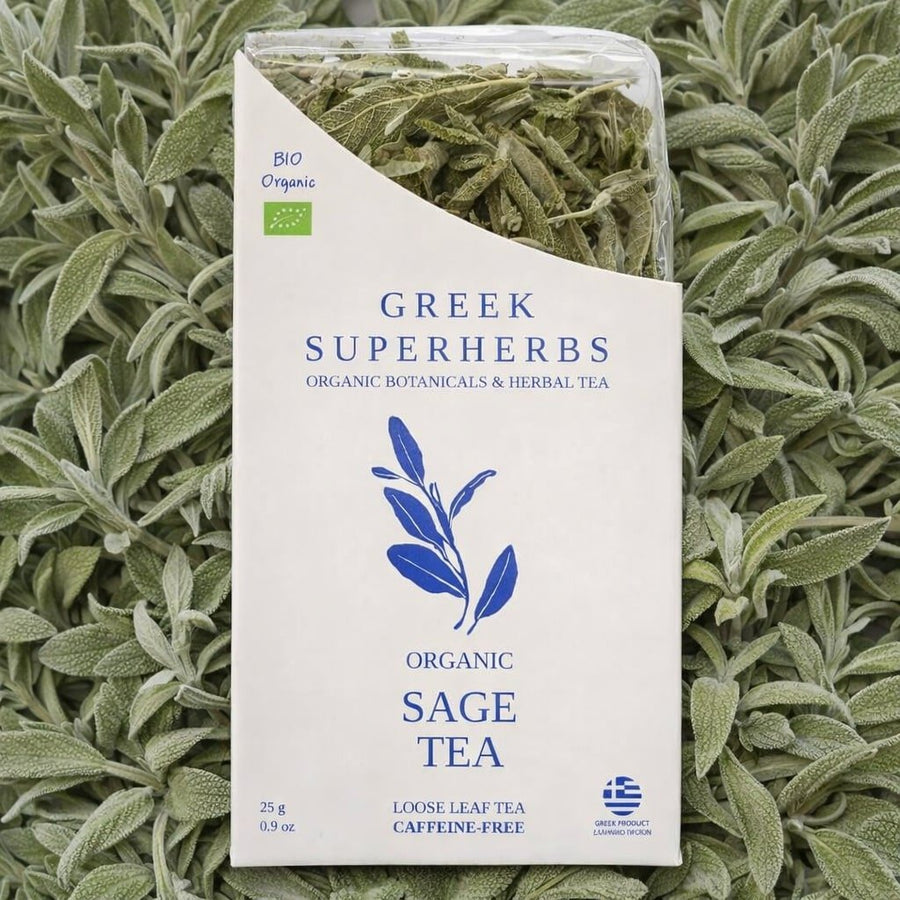

A cup of tea before a workout is an old habit with a new name. Search "herbal pre workout" and you'll find big promises about stamina and strength. The truth is more useful. Caffeine is the only drink ingredient with strong evidence for better performance, and green tea contains some. Caffeine-free herbal teas are a different tool. They hydrate you, can sharpen alertness, and won't keep you up after an evening session. Here is the best tea before a workout for each situation, how long before to drink it, and what to sip afterwards.
Key takeaways
- Caffeine works best: 3–6 mg per kg of body weight, about 60 minutes before exercise, has the strongest evidence. A cup of green tea gives you only a small fraction of that.
- Caffeine-free has its place: herbal teas suit evening training, caffeine-sensitive people and anyone avoiding stimulants. They help hydration and alertness, not raw power.
- Timing: drink your pre-workout tea 30–60 minutes before you start, so you're hydrated but not sloshing.
- For soreness: in a controlled trial, 2 g of ginger a day for 11 days reduced post-exercise muscle pain by about a quarter.
- After training: rehydrate first. A calming, caffeine-free cup such as chamomile or mountain tea fits the wind-down.
Featured in this article

Does tea work as a pre-workout?
It depends on what you want from it. Commercial pre-workout powders are usually built around caffeine, often with added ingredients such as beta-alanine or nitrates. A cup of tea is a much simpler drink. It can do three useful things before training:
- Hydrate you. Starting a session already short on fluid makes effort feel harder. Sports medicine guidelines advise drinking slowly in the hours before exercise rather than gulping at the last minute.1
- Sharpen alertness. Some herbs, peppermint above all, make people feel more alert in small studies.2
- Provide caffeine, if you choose a caffeinated tea. This is the only part with strong evidence for better performance.
What tea won't do is build muscle, raise testosterone or replace training, sleep and food. Any "herbal herbs pre workout" product that promises more than this is overselling.
Caffeine vs caffeine-free pre-workout tea
We sell mostly caffeine-free teas, so it would be easy to skip this part. But caffeine is the best-studied legal performance aid there is. The International Society of Sports Nutrition concludes that 3–6 mg per kg of body weight, usually taken about 60 minutes before exercise, consistently improves performance. The effect is largest for endurance, with smaller gains in strength and sprinting.3
Tea, though, is a light source. According to the FDA, 12 fl oz of green tea has about 37 mg of caffeine and black tea about 71 mg, compared with 113–247 mg in brewed coffee.4 A 70 kg (154 lb) person would need 210 mg or more to reach the studied range. Green tea gives a gentle lift, not a full ergogenic dose.
| Caffeinated tea (green, black) | Caffeine-free herbal tea | |
|---|---|---|
| Performance evidence | Strong for caffeine, though tea supplies a small dose | Small studies on alertness and hydration only |
| Best for | Morning or midday sessions, endurance work | Evening training, caffeine-sensitive people, stimulant-free days |
| Downsides | Can disturb sleep, jitteriness, reflux in some people | No true stimulant effect |
| Our pick | Saffron Green Tea with Ginger & Liquorice | Energy Tea or Mountain Tea |
Caffeine-free makes sense if you train after work and value your sleep, if caffeine makes you anxious or shaky, if you're already at your daily limit from coffee, or if your doctor has advised you to cut down.

Best tea before a workout: the options
- Strong evidenceCaffeine, from any source, including green and black tea, at the right dose.
- Small human studiesPeppermint for alertness and exercise measures; ginger for muscle soreness; mountain tea extract for attention.
- No good evidenceTribulus for strength, muscle or performance. Trials have not found a benefit.
1. Green tea: the one caffeinated option
If you want caffeine but less than coffee, green tea is the gentle route. Our Saffron Green Tea with Ginger & Liquorice is the only caffeinated tea we sell. It blends green tea with Kozani saffron, ginger and liquorice. Drink it about an hour before a morning or midday session. Skip it in the evening, and see the liquorice note under safety.
2. Peppermint: alertness and easier breathing (maybe)
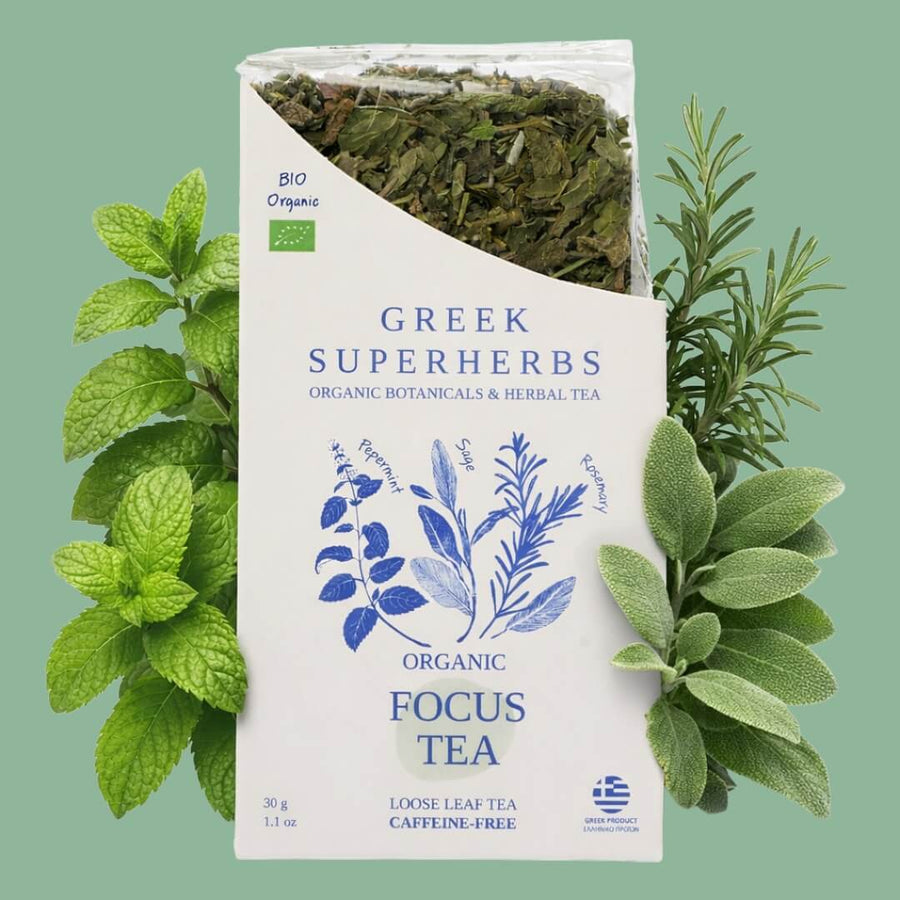
In a study of 180 young adults, peppermint tea increased feelings of alertness and improved memory compared with chamomile or hot water.2 A small sports study went further. Twelve young men drank water with a drop of peppermint oil every day for 10 days and afterwards exercised longer before exhaustion, with better lung-function measures.5 That study had no placebo group, though, and hasn't been convincingly repeated. Treat peppermint as a pleasant wake-up, not a proven performance aid. Our Focus Tea combines peppermint with rosemary and sage.
3. Greek mountain tea: calm focus, caffeine-free
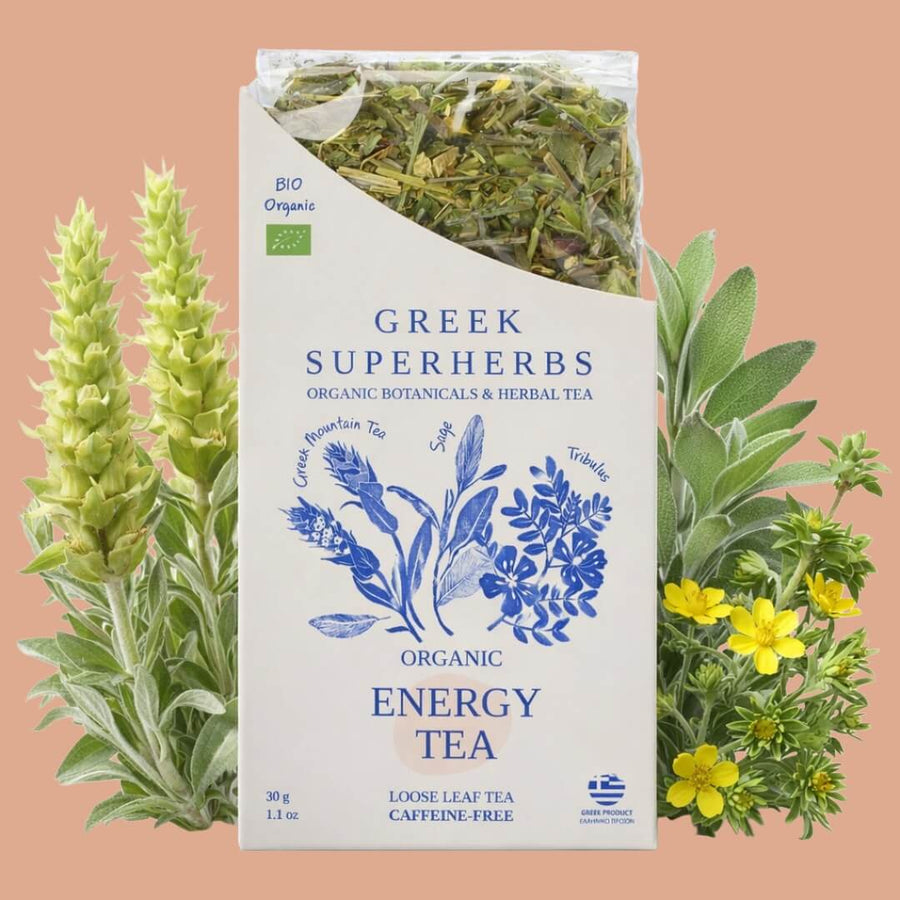
Mountain tea is Greece's everyday herbal tea and the base of our Energy Tea. In a 28-day trial in adults aged 50–70, a mountain tea extract improved one measure of attention and lowered anxiety.6 It wasn't a sports study, but steady focus without jitters suits skill work such as yoga, climbing or lifting technique. Read more in our Greek mountain tea guide.
4. Tribulus: tradition, not performance
Tribulus is one of the three herbs in our Energy Tea and a traditional tonic in Greece. It's also heavily sold to athletes. Clinical trials have not found improvements in strength, muscle mass or exercise performance, and most found no change in testosterone.7 We include it for tradition and flavour, and we won't claim it makes you stronger.
5. Beetroot: the non-tea option with evidence
For context, the best-studied caffeine-free option is beetroot juice, not a tea. Its nitrates can make endurance exercise slightly more efficient. A systematic review found the best results with 6–8 mmol of nitrate taken 90–150 minutes before exercise.8 If you race, it's worth reading about. You can pair it with a caffeine-free tea without any problem.
Shop the article




How long before a workout to drink tea
Aim for 30–60 minutes before you start. That leaves time to absorb the fluid and visit the bathroom. For caffeinated tea, about 60 minutes matches the timing used in most caffeine studies.3 The American College of Sports Medicine suggests slowly drinking about 5–7 ml per kg of body weight at least four hours before exercise, then a little more closer to the start if your urine is still dark.1 For a 70 kg person, that's roughly one and a half large mugs over the afternoon.
- Brew strong: 1–2 teaspoons of Energy Tea or mountain tea per 12 oz / 350 ml of water. Simmer gently for 5–7 minutes, covered.
- Cool it down: hot tea just before exercise can feel heavy. Let it cool to warm, or pour it over ice.
- Drink 30–60 minutes before: finish your cup, then sip water during the session as usual.
- Summer version: cold-brew a jar overnight so it's ready for the gym bag. See our cold brew herbal tea guide or browse our herbal iced teas.
| When | What to drink | Why |
|---|---|---|
| Morning or midday, 60 min before | Saffron Green Tea with Ginger & Liquorice | A small dose of caffeine |
| Evening, 30–60 min before | Energy Tea or Focus Tea | Hydration and alertness without caffeine |
| Hot day | Cold-brewed mountain tea | Easy to drink in volume |
| Straight after | Water first, then a cup of mountain tea | Rehydration |
| Evening wind-down | Chamomile | Caffeine-free and calming |

Best tea after a workout
Recovery is mostly about fluid, food and sleep. Tea can help with the first and the last.
Ginger for sore muscles
The best evidence here is for ginger. In two controlled trials with 74 volunteers in total, people took 2 g of raw or heat-treated ginger a day for 11 days. Heavy arm exercise on day 8 caused muscle soreness, and the ginger groups reported about 25% less pain in the following days than the placebo groups. Heating the ginger didn't change the effect.9 The study used capsules. A tea with ginger in a blend, like our saffron green tea, contains less, so think of it as a warming bonus rather than the trial dose.
Chamomile and mountain tea for the wind-down
In the same study that found peppermint tea increased alertness, chamomile tea left people feeling calmer than peppermint did.2 That makes it a good post-workout choice at night, when you want to come down from training and sleep well. Our whole-flower Greek chamomile and plain mountain tea are both caffeine-free.
Caffeine for performance, herbs for everything around it: hydration, focus and a calm evening after a hard session.
Tea doesn't replace a post-workout meal. After a hard session, protein and carbohydrate do most of the repair work.
Safety notes
Caffeine: the FDA considers up to 400 mg a day generally safe for most healthy adults. If you're pregnant, trying to conceive, breastfeeding, or have heart rhythm problems or anxiety, ask your doctor about your limit.4
Liquorice: liquorice contains glycyrrhizin. In large amounts or with long-term use it can raise blood pressure, lower potassium and cause heart rhythm problems. It's a particular concern for people with high blood pressure or heart or kidney disease, and it can interact with corticosteroids.10 If that's you, skip the saffron green tea and check with your doctor.
Ginger: can cause heartburn or stomach upset. Ask your doctor before taking ginger regularly if you take medication or are pregnant.11
Mint-family allergy: mountain tea, sage, peppermint and rosemary are in the mint family. Avoid them if you react to that plant family.
Tribulus: it may add to the effects of blood pressure, diabetes and diuretic medicines. Check with your doctor before daily use if you take any of these.7 Our blends are for adults and not recommended during pregnancy or breastfeeding.
Pre-workout tea FAQ
What is the best tea to drink before a workout?
For performance, a caffeinated tea such as green tea, about 60 minutes before, since caffeine has the strongest evidence. For evening training or if you avoid stimulants, a caffeine-free tea such as mountain tea or a peppermint blend, 30–60 minutes before, helps with hydration and alertness.
How long before a workout should I drink tea?
About 30–60 minutes before. For caffeinated tea, around 60 minutes matches most caffeine studies. Drink slowly so you aren't exercising on a full stomach.
Is green tea a good pre-workout?
It's a mild one. A 12 oz cup has around 37 mg of caffeine, far less than the 3–6 mg per kg of body weight used in sports studies. It gives a gentle lift with less risk of jitters than coffee.
Can herbal tea replace a pre-workout supplement?
Not for performance. Caffeine-free herbal tea won't match caffeine's effect. It does help with hydration and alertness, and it's a good choice for evening sessions or stimulant-free days.
What is the best tea after a workout?
Rehydrate with water first. Then a caffeine-free cup such as chamomile or mountain tea fits the wind-down, especially in the evening. Ginger has the best evidence for easing muscle soreness, although the trial used 2 g daily in capsules.
Is ginger tea good for sore muscles?
Ginger has been shown to reduce exercise-induced muscle pain by about 25% when taken at 2 g a day for 11 days. A cup of tea contains less ginger than that, so the effect of tea alone is uncertain.
What is an energy-boosting herbal tea for athletes?
There's no caffeine-free herbal tea that boosts energy like caffeine. Peppermint, rosemary and mountain tea can help you feel more alert and focused, and every cup adds to your fluid intake.
Choose your tea by the time of day you train. Before a morning session, a green tea gives you a little caffeine. After work, a caffeine-free herbal cup keeps you hydrated and alert and leaves your sleep alone. After any session, a calming cup helps you wind down. Brew it strong, drink it 30–60 minutes ahead, and let the training do the rest.
Shop the article


Keep reading: Best herbal tea for energy (caffeine-free) · How to cold brew herbal tea · Greek mountain tea benefits
Sources
- Sawka MN, Burke LM, Eichner ER, et al. American College of Sports Medicine position stand: exercise and fluid replacement. Med Sci Sports Exerc. 2007;39(2):377–390.
- Moss M, Jones R, Moss L, Cutter R, Wesnes K. Acute consumption of peppermint and chamomile teas produce contrasting effects on cognition and mood in healthy young adults. Plant Science Today. 2016;3(3):327–336.
- Guest NS, VanDusseldorp TA, Nelson MT, et al. International Society of Sports Nutrition position stand: caffeine and exercise performance. J Int Soc Sports Nutr. 2021;18:1.
- U.S. Food and Drug Administration. Spilling the beans: how much caffeine is too much?
- Meamarbashi A, Rajabi A. The effects of peppermint on exercise performance. J Int Soc Sports Nutr. 2013;10:15.
- Wightman EL, et al. The acute and chronic cognitive and cerebral blood flow effects of a Sideritis scardica (Greek mountain tea) extract. Nutrients. 2018;10(8):955.
- Memorial Sloan Kettering Cancer Center. Tribulus terrestris: About Herbs.
- Domínguez R, Cuenca E, Maté-Muñoz JL, et al. Effects of beetroot juice supplementation on cardiorespiratory endurance in athletes: a systematic review. Nutrients. 2017;9(1):43.
- Black CD, Herring MP, Hurley DJ, O'Connor PJ. Ginger (Zingiber officinale) reduces muscle pain caused by eccentric exercise. J Pain. 2010;11(9):894–903.
- National Center for Complementary and Integrative Health. Licorice root: usefulness and safety.
- National Center for Complementary and Integrative Health. Ginger: usefulness and safety.
This article is for general information and is not medical advice. These statements have not been evaluated by the FDA. Our products are not intended to diagnose, treat, cure or prevent any disease. If you are pregnant, nursing, taking medication or have a medical condition, talk to your doctor first.